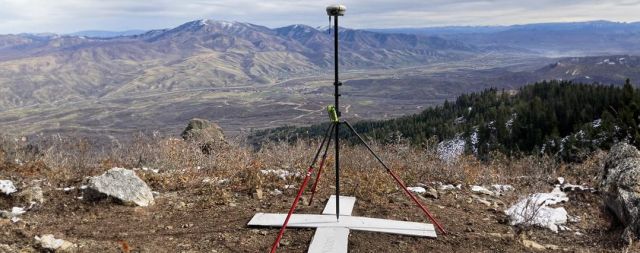

Local, State, Federal, Tribal, and Government Agencies
Aerial imagery and lidar services to help GIS professionals solve problems and make well-informed decisions for their communities.
Government Solutions
Local, State, Federal, and Tribal government agencies are using aerial mapping, orthoimagery, and lidar to solve problems and make well-informed decisions for their communities.
95West delivers geospatial services that help:
- Design new roadways and infrastructure
- Document and monitor utilities
- Perform risk assessment
- Streamline community planning
- Aid archeological inventory
- Conduct watershed analysis
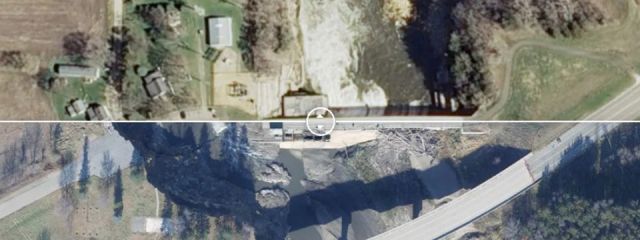
95West is also ready to serve in emergency response efforts and natural disaster recovery. We can assist in documenting damage assessment, forensic analysis, and disaster response planning.
Wide-Area Orthoimagery
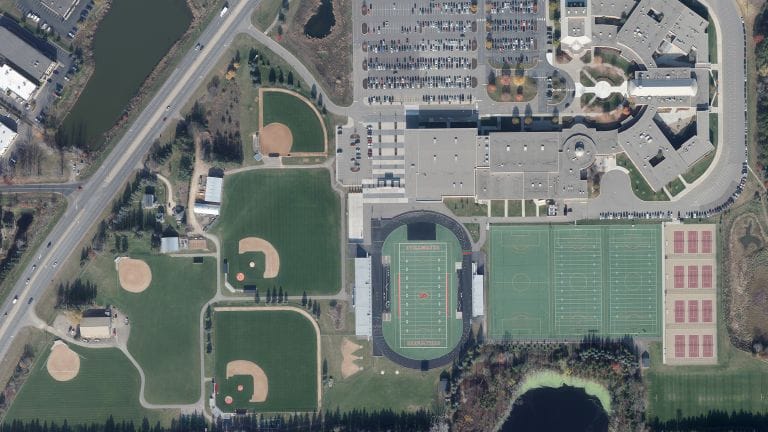
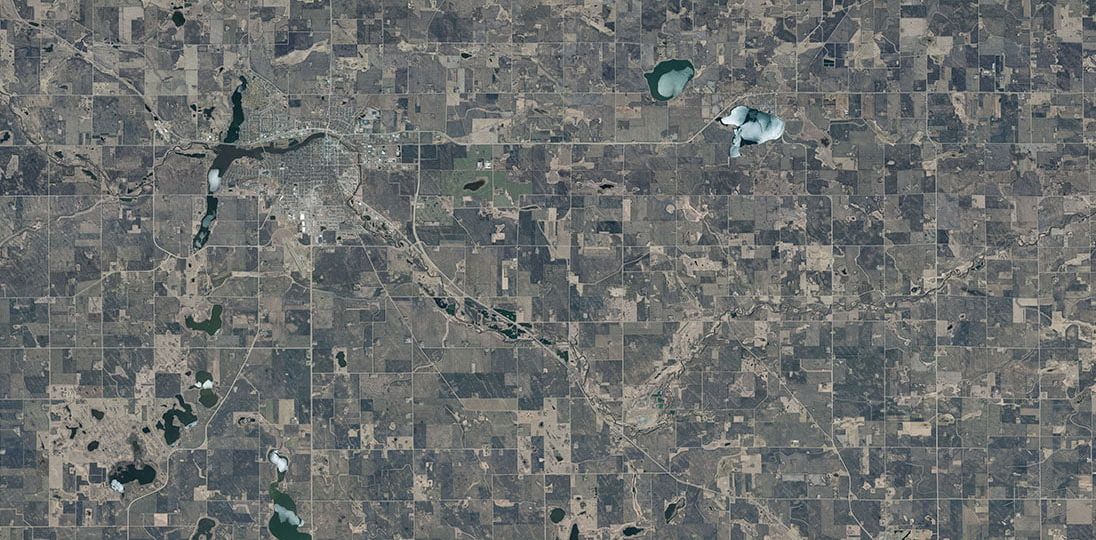
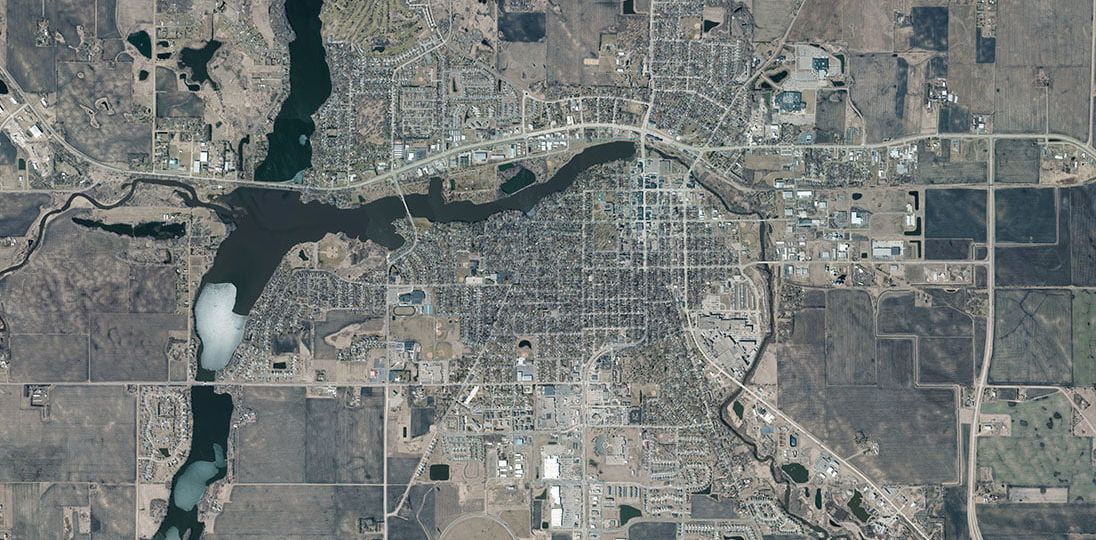
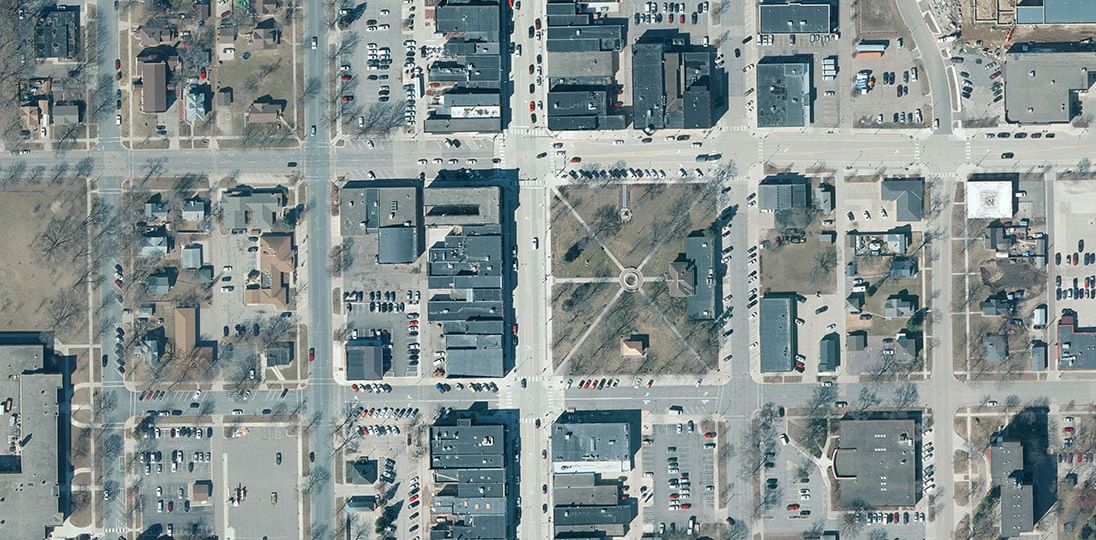
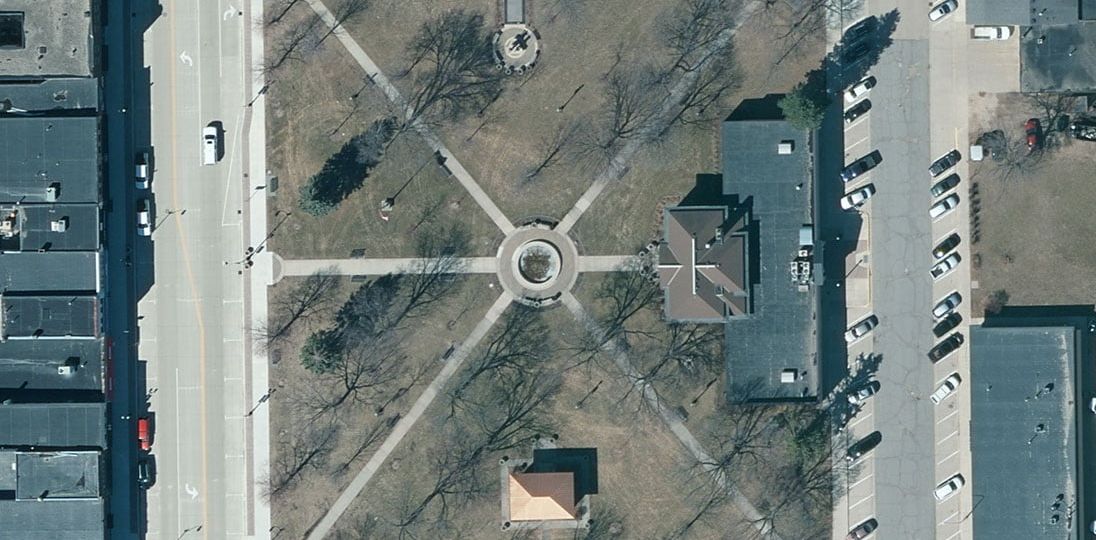
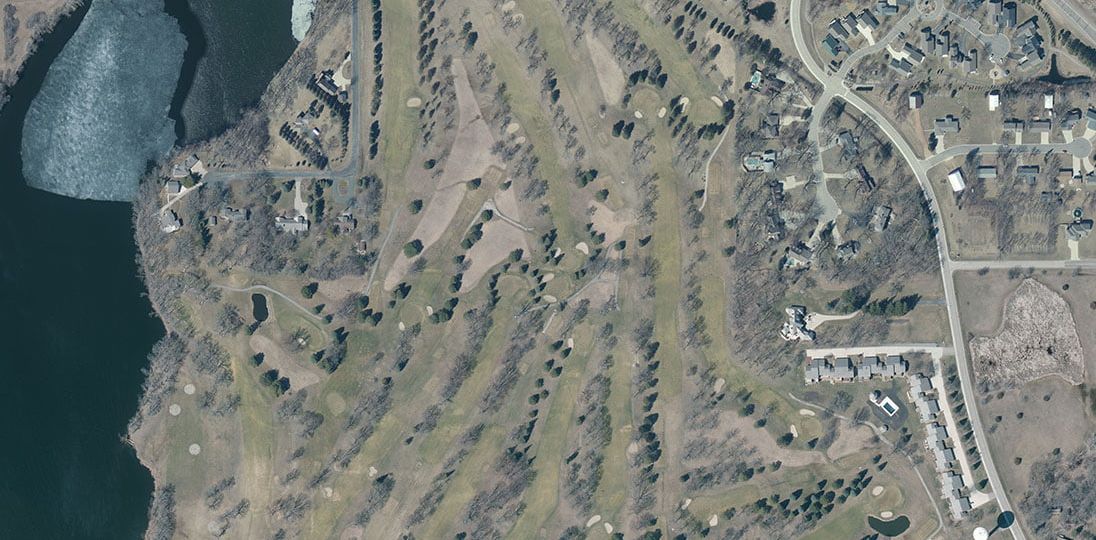
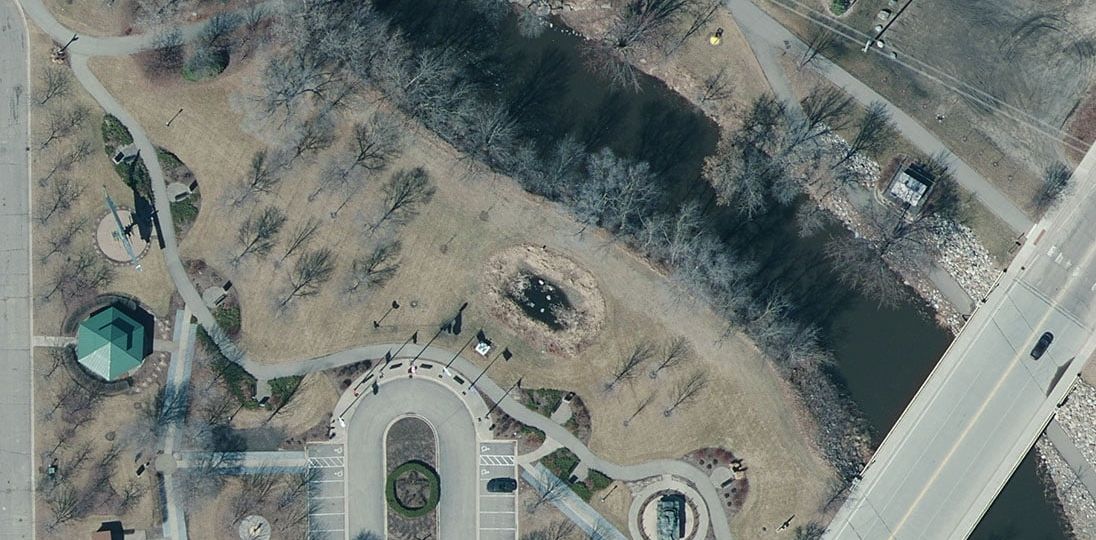
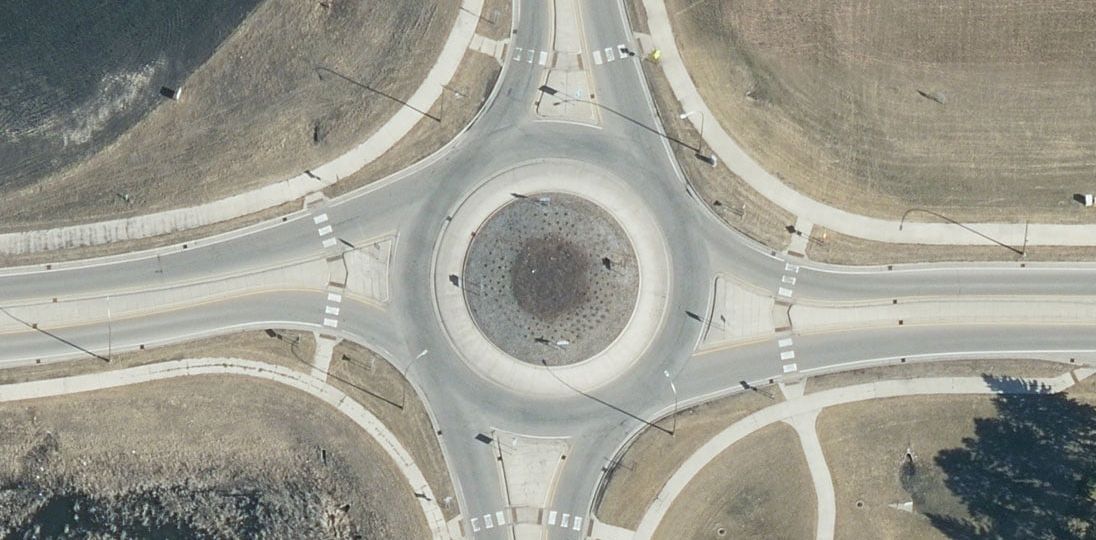
Geospatial imagery is an everyday resource for county and city staff for big- picture planning and detailed inventory or property records. More aerial acquisition options are available today that offer considerable detail and integration with GIS systems.
To help you prepare for the future, 95West can capture large-format imagery and high-density lidar simultaneously in a single flight, resulting in greater detail in much less time than smaller planes or UASs.
- Orthophotos for wide-area area coverage at ground sample distances from 0.1′ or larger
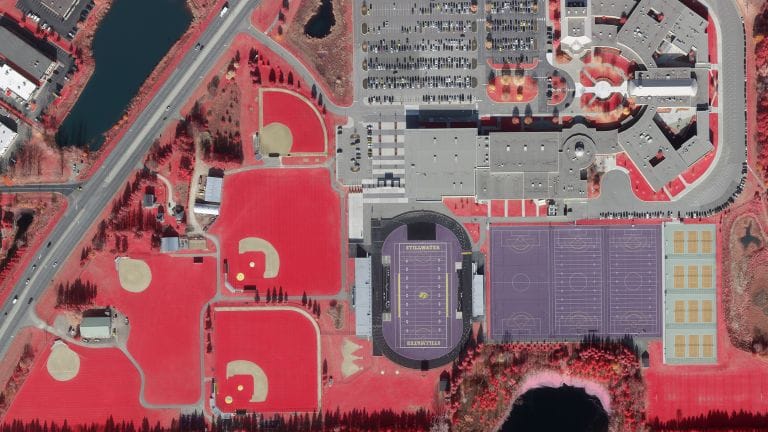
- Three-band (RGB) or four-band imagery (CIR)
- Fully processed high-resolution imagery tiles and compressed mosaics
- Meets ASPRS Positional Accuracy Standards for Digital Geospatial Data
Wide-Area Airborne Lidar
Airborne lidar is used to help map, model, and inventory a wide variety of public assets including utilities, roads and trails, public works projects, and other infrastructure. Point density is tailored to meet your project needs and specifications.
95West delivers lidar point clouds, survey-grade terrain models, and GIS products to help:
- Support FEMA floodplain mapping and local LOMA/LOMR updates
- Improve and update GIS databases and web applications
- Road and trail design and improvements
- Evaluate forest health and build Community Wildfire Response Plans
- Help visualize complex public works projects and development initiatives
- ASPRS Positional Accuracy Standards, USGS 3DEP, or custom project specifications
Color-Infrared (CIR) Imagery
CIR 4-band imagery captures wavelengths emanating from vegetation, providing a more reliable means of monitoring and analysis. This can be used to assess vegetation health and classification, analyze invasive species, and more.
CIR is also used to analyze soil properties such as permeability, salinity, and erosion. The Normalized Difference Vegetation Index (NDVI) can be derived from digital CIR data, a key indicator in plant analysis, fertilizer and herbicide applications, and yield estimates.
Managers of forests, rivers, watersheds, wildlife habitats, and other public lands have come to rely on aerial remote sensing to efficiently image and analyze assets on land within their stewardship. When canopy volumes need to be studied, lidar provides a reliable means of penetrating vegetation to establish an accurate baseline ground surface as well as modeling the top of the canopy. The use of this technology allows us to estimate the quantity, type, and height of trees.